MACS: Magnetic AGV Contactless-charging System
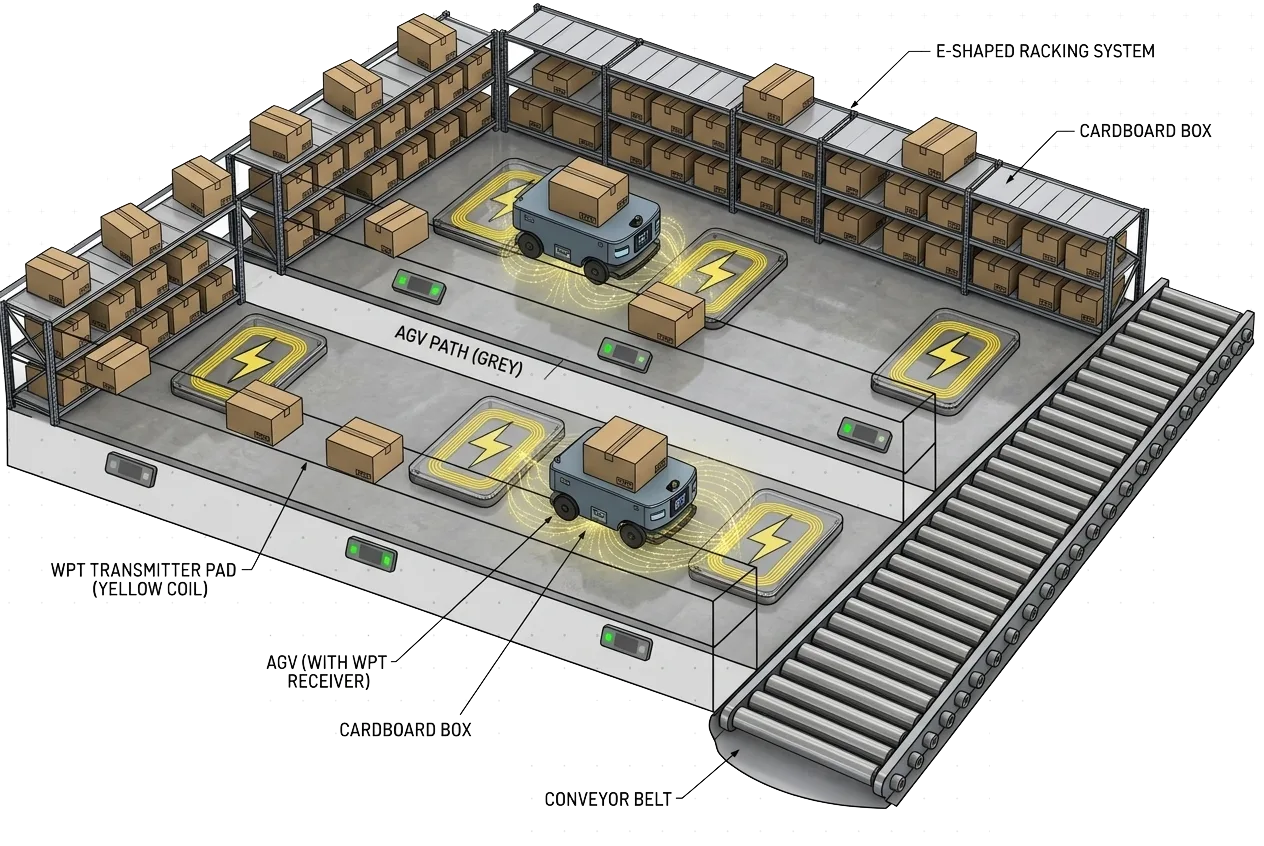
Indoor logistics AGVs usually stop working and drive to a charging station. That forces fleets to keep spare robots, manage battery state of charge carefully, and queue at stations. MACS changes where charging happens: commercial 82–85 kHz wireless power modules are installed beneath the waypoints where AGVs already stop to load and unload, so charging happens during work rather than in place of it.
- Charging energy retained versus full-path charging on the same route
- 95.7%
- Transmitter infrastructure cost (₩360,000 → ₩60,000)
- −83.3%
- Best measured end-to-end WPT efficiency
- 85.72%
Prototype
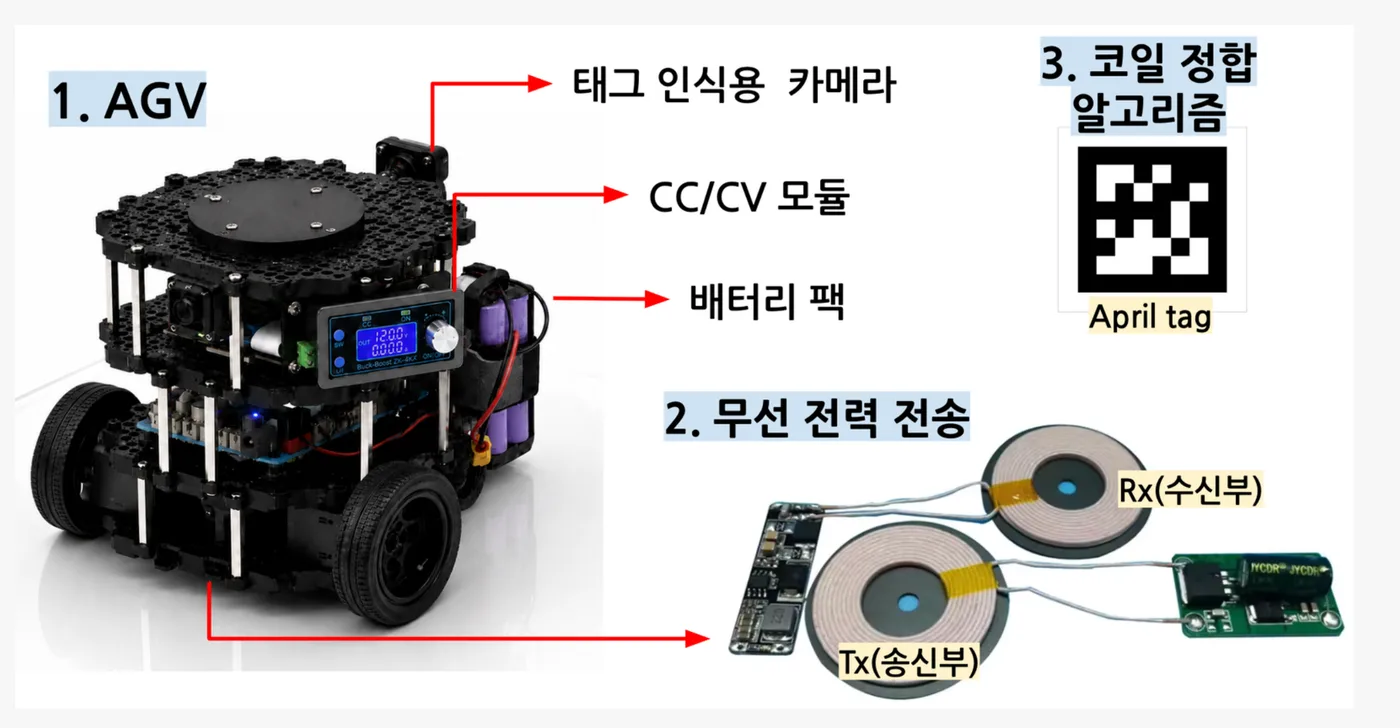
The team rebuilt a ROBOTIS TurtleBot into a wireless-charging AGV and demonstrated it on a 1200 × 600 mm physical track. A tag-recognition camera, a CC/CV charging module, a battery pack, and the wireless receiver were integrated on the robot; an AprilTag-based alignment routine positions the receiver coil over the transmitter at each waypoint.
System architecture
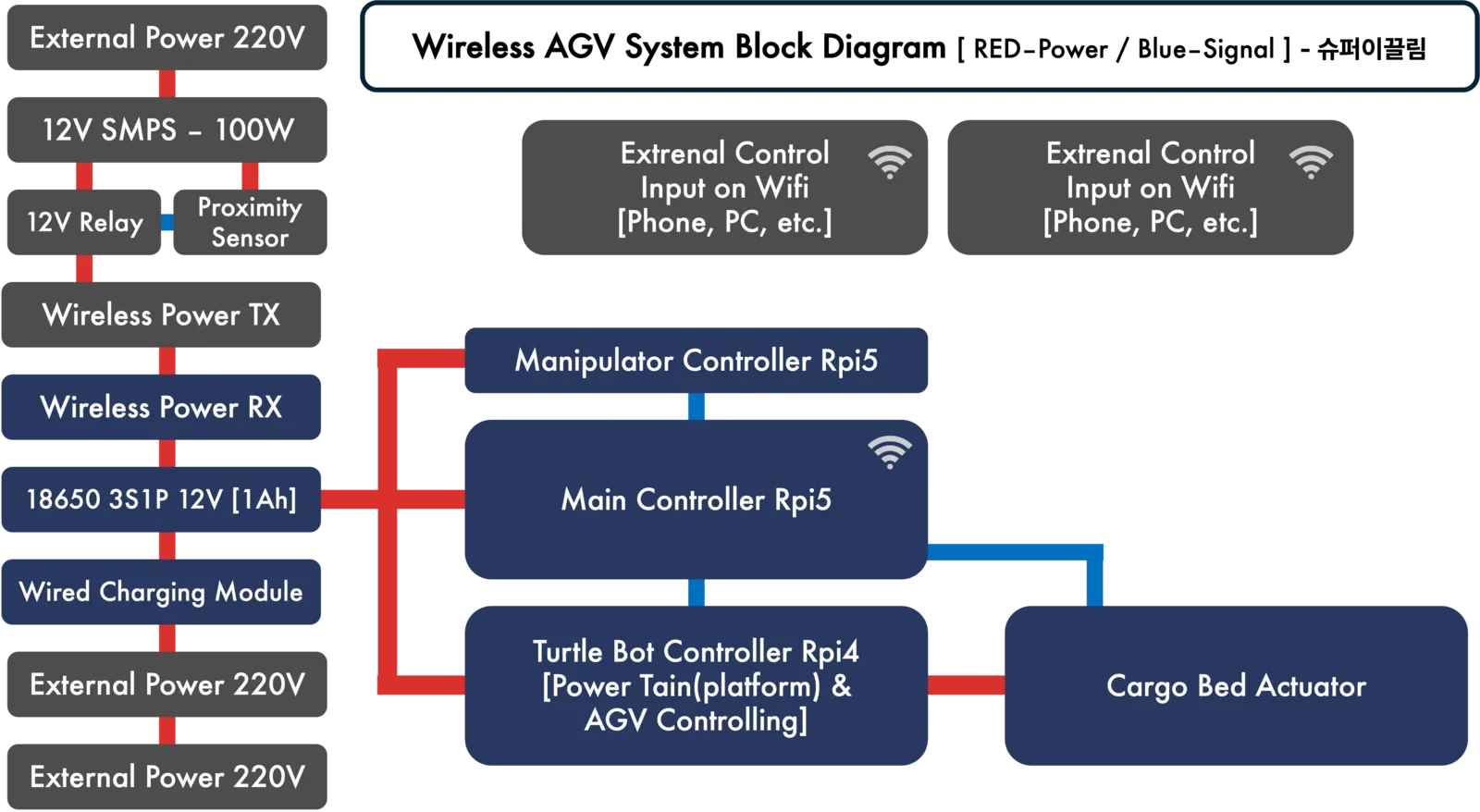
On the station side, a 220 V supply feeds a 100 W, 12 V SMPS, a relay, and a proximity sensor ahead of the wireless transmitter. On the vehicle, a Raspberry Pi 5 main controller coordinates a Raspberry Pi 4 for the TurtleBot powertrain, a second Raspberry Pi 5 for the manipulator, and a cargo-bed actuator; an 18650 3S1P 12 V pack charges through the wireless receiver or a wired charging module.
Validation
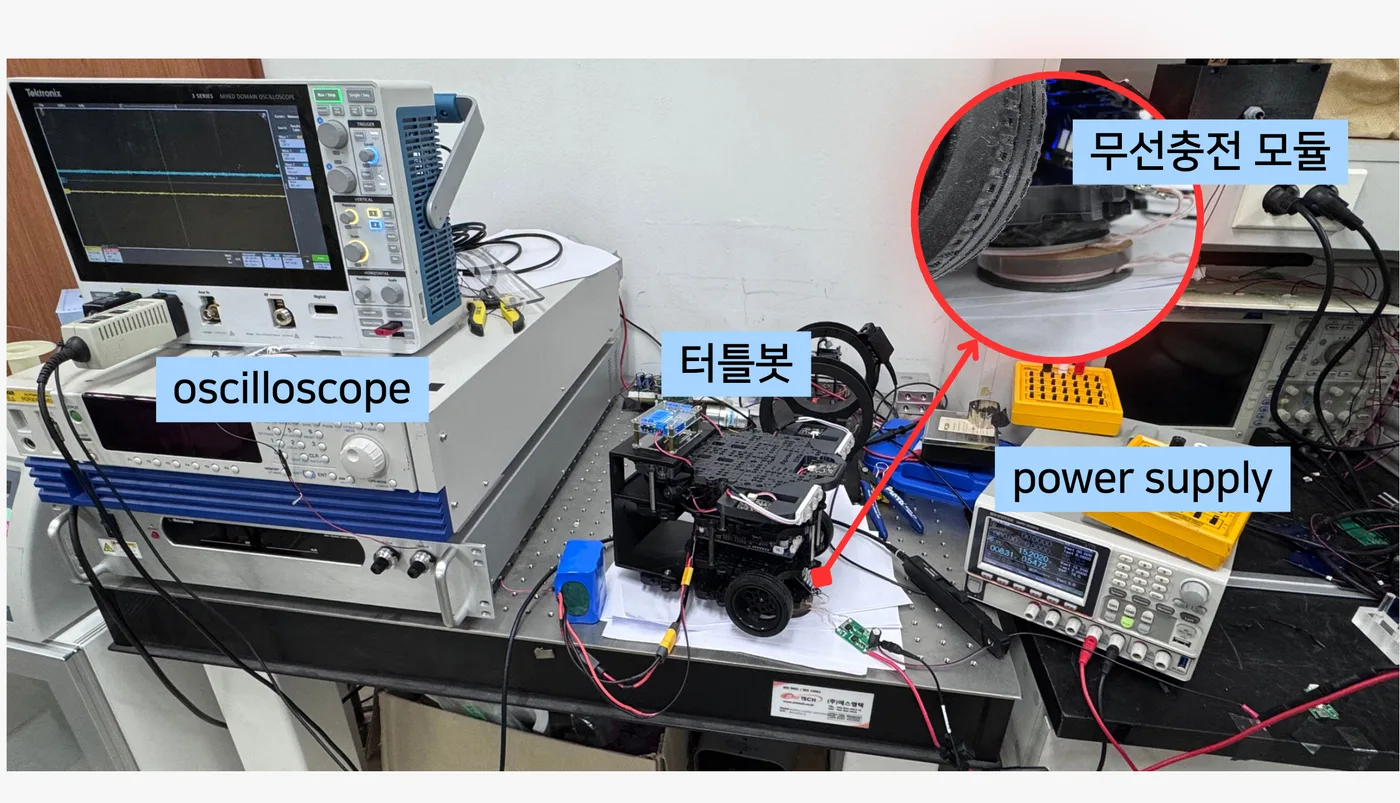
Transmitter input and receiver output power were measured with an oscilloscope and a bench power supply. End-to-end efficiency reached 79.96% at full coil alignment with a 5 mm gap and 85.72% at the best tested operating point.
On the same test route, waypoint charging delivered 0.8333 Wh versus 0.8704 Wh for charging along the entire path. Coils along the driving path contributed only about 4.4% of the energy, which supports installing transmitters only at waypoints.
Comparison with existing approaches
| Wired charging | Full-path inductive charging | MACS | |
|---|---|---|---|
| Where it charges | Drives to a station | Along the entire path | At work waypoints |
| Infrastructure | Separate stations | Coils along every path | Selected waypoints only |
| Work and charging | Separated | Charges while moving | Simultaneous |
| Adoption | Needs station space | Large-scale construction | Phased, on existing routes |
My role
- Led hardware for a team of four: integrated the wireless transmitter and receiver into the TurtleBot and redesigned its battery and electrical system.
- Proposed waypoint charging in place of a fully embedded track and designed the corresponding driving logic.
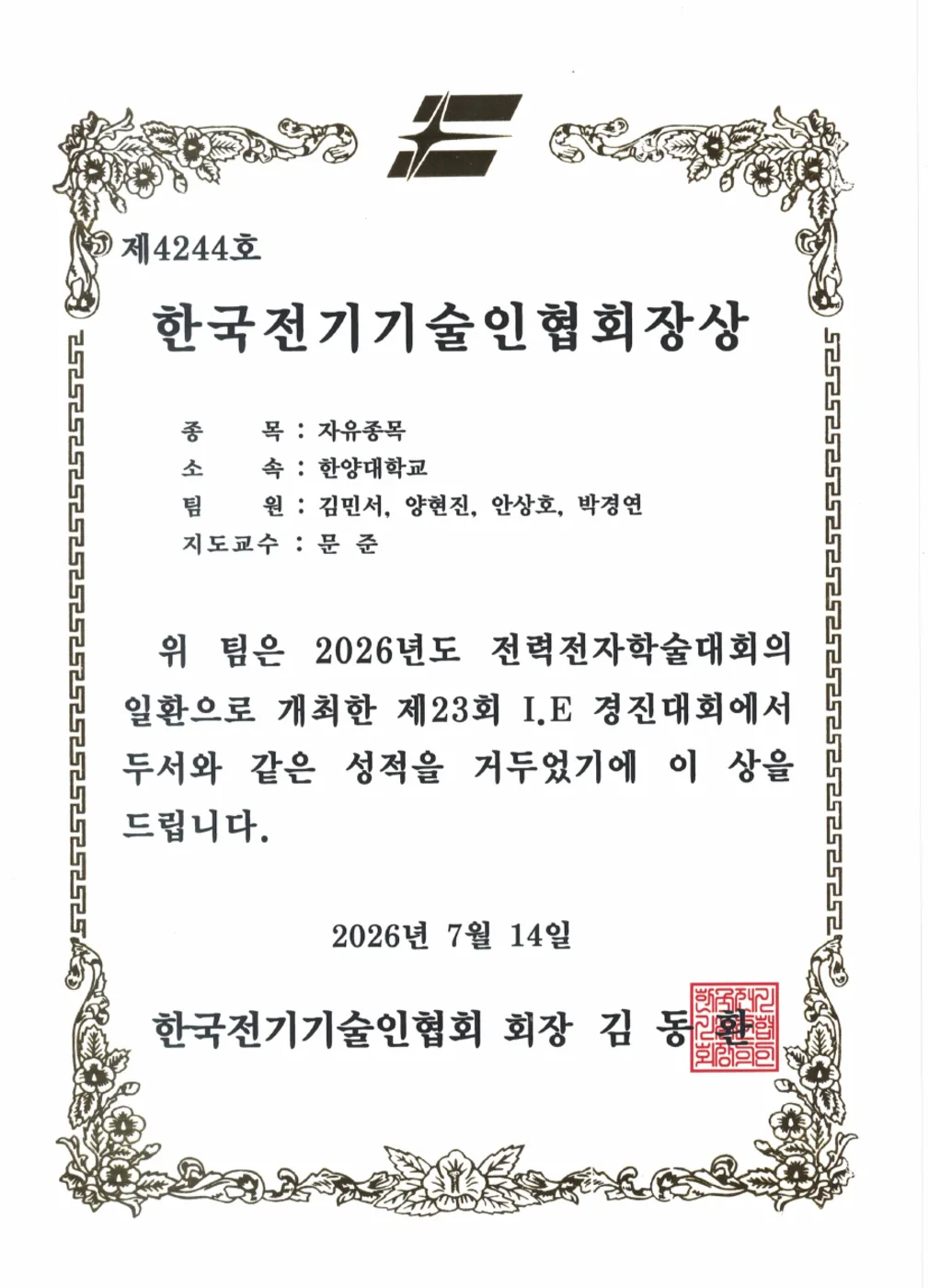
Award certificates
Resources
Technologies: WPT · Raspberry Pi · ROS · Arduino · Fusion 360 · Isaac Sim